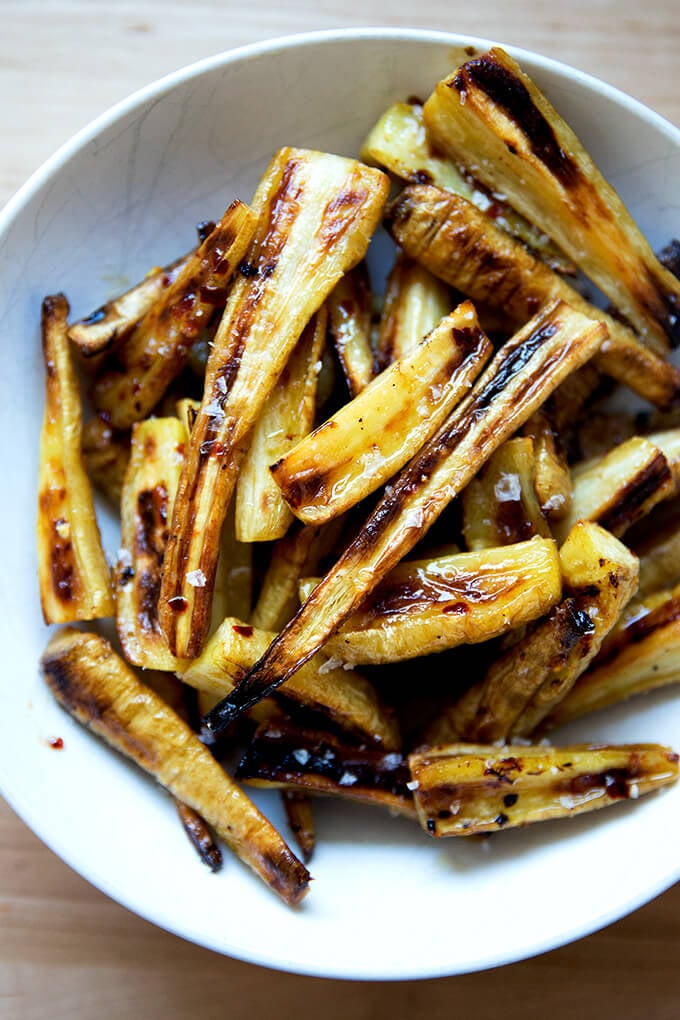
Sweet & Spicy Roasted Parsnips with Chili Maple Butter: Your New Favorite Vegetable Side
Forget everything you thought you knew about humble parsnips. Often overlooked in favor of their more popular root vegetable cousins, parsnips possess a unique flavor profile that truly shines when given the right treatment. And when that treatment involves a perfect balance of sweet, spicy, tangy, and rich, you’ve got a side dish that not only steals the show but might just become your family's most requested vegetable. Get ready to transform your culinary repertoire with these extraordinary roasted parsnips with chili maple butter.
This isn't just another roasted vegetable recipe. This is an experience. Imagine tender, fluffy parsnip interiors encased in beautifully caramelized, slightly crispy edges, all coated in a vibrant glaze. The magic lies in the chili maple butter – a decadent fusion where the deep sweetness of maple syrup meets the fiery kick of chili, brightened by a whisper of apple cider vinegar, and enveloped in luxurious butter. It's a symphony of flavors that will have even the most staunch vegetable skeptics reaching for seconds. Prepare to make these a staple on your dinner table; they are truly that good.
The Underrated Root: What Exactly Are Parsnips?
Parsnips are a fascinating and surprisingly complex root vegetable, often mistaken for oversized white carrots due to their similar appearance. However, their flavor is distinctly their own. While carrots are primarily sweet, parsnips offer a more intricate taste experience: an earthy foundation, a subtle peppery or spicy undertone, and a pronounced sweetness that develops beautifully when cooked.
Many describe their flavor as reminiscent of anise, while others detect notes of nutmeg or a general nuttiness. This multifaceted profile is what makes them such a versatile ingredient, capable of pairing well with both savory and sweet elements. Beyond their captivating taste, parsnips are also a nutritional powerhouse, packed with fiber, vitamin C, vitamin K, and folate, making them a healthy and delicious addition to any meal.
When selecting parsnips, size often matters. Smaller, younger parsnips tend to be sweeter and more tender, without the fibrous, woody core that can develop in larger, older specimens. These larger parsnips can sometimes also carry a slightly bitter note, emphasizing the advantage of choosing their more youthful counterparts for the best flavor and texture experience.
Why Roasting is the ONLY Way to Go for Parsnips
While parsnips can be boiled, steamed, or even added to stews, there's one cooking method that truly unlocks their full potential: roasting. High-heat oven roasting is not merely a cooking technique; it's a transformative process that elevates parsnips from a simple root vegetable to a gourmet delight.
When parsnips are subjected to high temperatures, several magical things happen. The natural sugars within the parsnips undergo caramelization, creating those irresistible golden-brown, crispy edges that are packed with concentrated flavor. This process, known as the Maillard reaction, also contributes to a deeper, richer taste profile that you simply won't achieve through boiling or steaming. Those methods, while softening the vegetable, leach out precious nutrients and flavors, leaving you with a less exciting, often watery result.
Roasting, on the other hand, preserves and intensifies the parsnips' inherent sweetness and earthy notes. The exterior develops a delightful crispness, while the interior becomes wonderfully tender and fluffy. Furthermore, it's an incredibly hands-off method. Once the parsnips are prepped and on a sheet pan, the oven does most of the work, freeing you up to focus on other components of your meal. For the most delicious, flavor-packed parsnips with satisfying texture, roasting is unequivocally the superior choice.
Crafting the Irresistible Chili Maple Butter
The star of this dish, arguably even more than the parsnips themselves, is the vibrant and complex chili maple butter. This isn't just a simple glaze; it's a carefully balanced concoction designed to complement and elevate the earthy sweetness of the roasted parsnips. Its components work in harmony to create a truly unforgettable flavor.
Maple Syrup: While some recipes call for honey, using pure maple syrup adds a distinct depth and warmth to the glaze. Its rich, almost smoky sweetness perfectly contrasts the spice and tang, creating a comforting yet exciting base. This natural sweetener also provides a beautiful sheen as it caramelizes slightly in the residual heat.
Chili: Here's where the "spicy" comes in. You have options! Crushed red pepper flakes offer a quick, convenient heat and are readily available. For a more authentic and slightly different flavor profile, dried chiles de árbol can be used, providing a bright, clean heat. The beauty of either choice is that you can adjust the quantity to suit your preferred spice level – from a gentle warmth to a bold kick. Don't be shy; a little heat truly makes the sweetness pop.
Butter: The unsung hero, butter provides that luscious richness and silky mouthfeel that makes this glaze so incredibly indulgent. It coats each parsnip piece, ensuring every bite is flavorful and satisfying. For a non-dairy option, a good quality plant-based butter substitute works wonderfully too.
Apple Cider Vinegar: This might seem like an unexpected addition, but it's crucial for balancing the flavors. A tablespoon of apple cider vinegar provides a bright, acidic "bite" that cuts through the sweetness of the maple and the richness of the butter. It prevents the glaze from being cloyingly sweet and adds a much-needed layer of complexity, making the entire dish feel fresh and vibrant. This tang is what takes the chili maple butter from good to extraordinary.
Optional Enhancements: For an extra layer of warmth, consider grating a little fresh ginger into your butter mixture, as its cozy notes beautifully round out the earthy spice of the parsnips. A pinch of smoked paprika can add a subtle smoky depth, and a touch of garlic powder can introduce a savory undertone. And don't forget the finish: a generous sprinkle of flaky sea salt just before serving. That delicate crunch and burst of salinity truly makes all the flavors sing.
To Peel or Not to Peel? The Parsnip Prep Debate
When it comes to preparing parsnips, a common question arises: should you peel them? You’ll find conflicting advice, and for good reason—it often depends on the parsnip itself.
For small, young, and tender parsnips, peeling is often unnecessary. Their skin is thin, mild, and won't detract from the eating experience. A good scrub under running water, followed by trimming the ends, is usually sufficient. You might even find that leaving the skin on adds a rustic charm and extra fiber.
However, for larger, older parsnips, peeling is generally recommended. The skin can become tougher, more fibrous, and sometimes even a bit bitter, especially if the parsnip has been stored for a while. Additionally, larger parsnips often develop a woody, fibrous core down the center that should be removed after halving or quartering them lengthwise. While peeling takes an extra few minutes, it ensures the best possible texture and flavor, preventing any unpleasant bitterness or chewiness.
Ultimately, the choice is yours and often comes down to personal preference and the quality of your parsnips. If you're unsure, or if visual appeal is a priority, a quick peel won't hurt. For a deeper dive into this culinary debate, check out our article on Roasted Parsnips: Peel or Not? With Chili Maple Butter.
Step-by-Step Guide to Perfectly Roasted Parsnips
Achieving perfectly sweet & spicy roasted parsnips with chili maple butter is simpler than you might think. Follow these steps for success:
- Prepare the Parsnips: Start by thoroughly scrubbing your parsnips under cold water. Trim off both ends. Depending on their size, you might choose to peel them (as discussed above). Halve them lengthwise. If they are very large, quarter them and carefully remove any tough, fibrous core that runs down the center. Cut them into roughly uniform pieces to ensure even cooking – about 2-3 inches long.
- Initial Seasoning & Roasting: In a large bowl, toss the prepared parsnips with a drizzle of olive oil, a generous pinch of salt, freshly ground black pepper, and a sprinkle of crushed red pepper flakes (if using them for initial roasting, otherwise they go into the butter). Spread the parsnips in a single layer on a large baking sheet, ideally cut-side down for maximum caramelization. Roast in a preheated oven at 425°F (220°C) for 25-30 minutes, or until they are fork-tender, with beautiful crispy, caramelized edges.
- Make the Chili Maple Butter: While the parsnips are roasting, gently melt your butter in a small saucepan or microwave-safe bowl. Stir in the maple syrup, apple cider vinegar, and your choice of chili (crushed red pepper flakes or finely chopped chiles de árbol). Whisk until thoroughly combined.
- Glaze and Serve: Once the parsnips are out of the oven, immediately transfer them to a large bowl. Pour the warm chili maple butter over the roasted parsnips and toss gently to ensure every piece is thoroughly coated in the glorious glaze.
- Final Flourish: Transfer to a serving dish, and for that extra professional touch and incredible texture, sprinkle generously with flaky sea salt. Serve immediately and watch them disappear!
For a streamlined approach and recipe specifics, don't miss our Easy Sheet Pan Chili Maple Roasted Parsnips Recipe.
Serving Suggestions & Pairings
These sweet & spicy roasted parsnips with chili maple butter are incredibly versatile and make a fantastic side dish for almost any meal. Their bold flavor profile allows them to stand up beautifully to rich main courses, yet they are equally at home alongside simpler fare.
- Holiday Feast: They make a spectacular addition to Thanksgiving, Christmas, or Easter dinners, offering a fresh and exciting alternative to traditional sides.
- Weeknight Dinner: Pair them with roasted chicken, grilled pork chops, or pan-seared salmon for an elevated weeknight meal that feels gourmet.
- Vegetarian Delight: Serve them alongside a hearty lentil loaf, a robust mushroom Wellington, or even as a unique topping for grain bowls.
- Brunch Side: A surprising but delightful addition to a savory brunch spread, cutting through the richness of eggs and bacon.
- Alongside Other Roots: For a diverse roasted vegetable platter, they pair wonderfully with carrots, sweet potatoes, or even Brussels sprouts.
Leftovers, though rare, are delicious reheated in the oven to regain some of their crispness, or even tossed cold into a salad for a burst of flavor and texture.
Conclusion
The journey from an unassuming root vegetable to a show-stopping side dish is truly remarkable with these sweet & spicy roasted parsnips with chili maple butter. This recipe proves that with a little creativity and the right flavor combinations, even the most underrated vegetables can become the star of your plate. The blend of earthy parsnips, sweet maple, fiery chili, and tangy apple cider vinegar creates a flavor experience that is both comforting and exhilarating. So, the next time you're looking to add something truly special to your meal, skip the usual suspects and give these chili maple roasted parsnips a try. Your taste buds, and your family, will thank you!
